
We voted. Now what?

With 5 of 50 primaries already complete, we’ve already seen one of Sway’s many features in action. Across these elections, leaders issued almost 3,000 candidate recommendations—helping each voter with ballots that sometimes unfurl to hundreds of races.
But Sway is much more than a voter guide app; it's designed to serve voters and leaders well beyond election season. If you’re a leader—especially one whose primary has passed—here are three ways you can still use Sway.
Don’t just swing elections. Pressure your electeds.
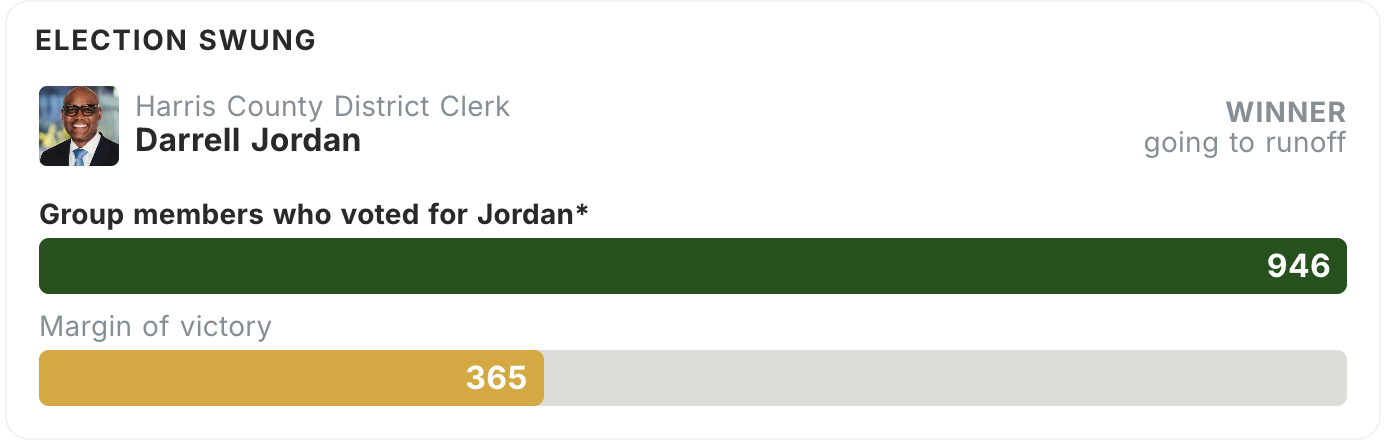
This primary season, Sway has swung races with a single reader’s influential endorsement. And in Texas alone, there were several “missed opportunities”—contests where the winning margin was well within reach of Sway's voter base, had an endorsement been made. We’re talking about some races with margins in the single-digits.
For leaders, engaging your supporters with recommendations doesn’t just help swing the next race. It also influences policies in the time between races, too. Assisted by your record of involvement, you can prove to your elected officials that the issues you represent have verified power.
Sway was built to force politics into this exact virtuous cycle. Candidates issue promises for votes, and voters spend the time between elections holding them accountable—with the threat of the next election ever-looming. There’s never been a better tool to do exactly this.
Most races are uncontested. You can change that.
In the Illinois primary, 5 of 6 races featured just one candidate. In hundreds of races, Sway voters likely would have backed an opposing candidate, if one existed.
This lack of choice is suffocating; voters who want an alternative are unable to organize their opposition to formally offer one.
If you’re a leader, don’t wait until the filing deadline to endorse confirmed candidates. Use your voting group as leverage to get more candidates in the race.
Oftentimes, candidates—especially down the ballot—decide against running because they sense a lack of support. In national races, that sense may come from polling data. In local races, that sense might just be a feeling, instead of cold, hard proof.
As a leader with a verified list of supporters and a distribution of the regions where they can vote, you are the super-connector who can offer the proof that convinces someone to run for office—turning races into real contests.
But this work can’t be done just before an election. It happens before the filing deadline—well before it.
Build coalitions with your supporters. Multiply your power.
If you’re a leader on Sway, you can navigate to your leader dashboard on the top right of your voting group, and find your “Top Linked Groups.”.
Here, you can see all the groups led by members of your group:
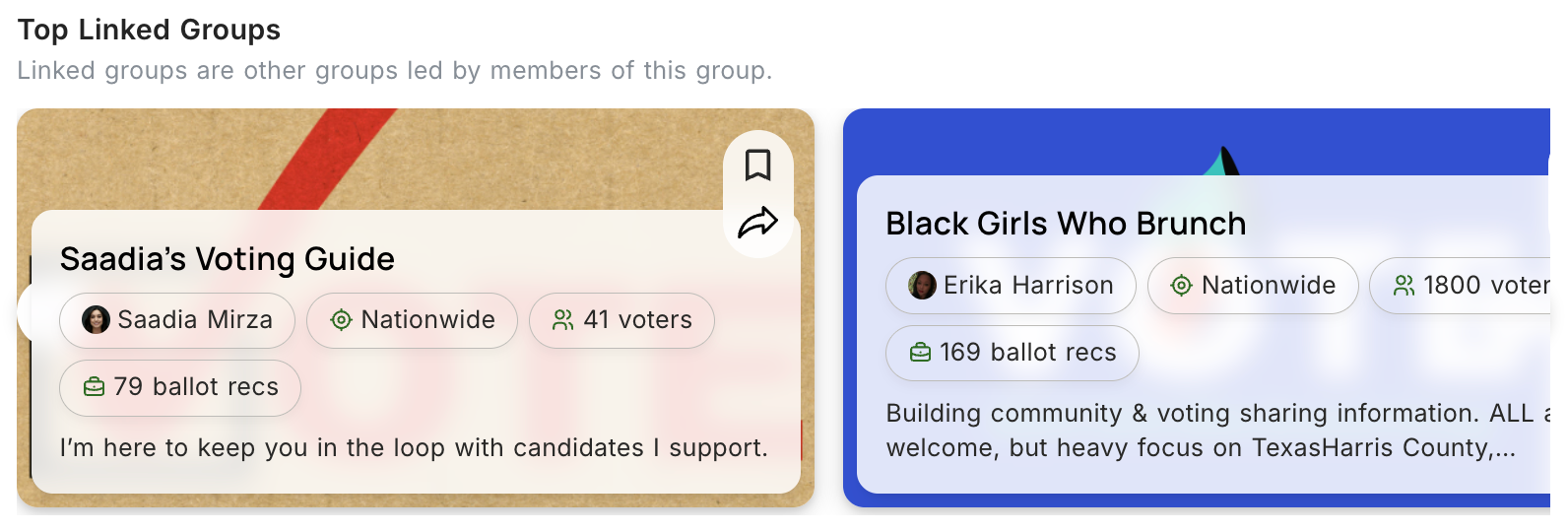
Use this feature to communicate with these leaders. Use this to build a coalition, and if it cuts across different issues, all the better. Use this to rally volunteers for public comment at city council, or to call your representative in DC.
If you used Sway ahead of your primary and found it useful, great! And for leaders from the 45 states that haven’t yet held one, there’s no better time to use the platform than now.
But it’s not just the leadup to election day where you can exercise your voice—it’s the time before, and the time after, too.